
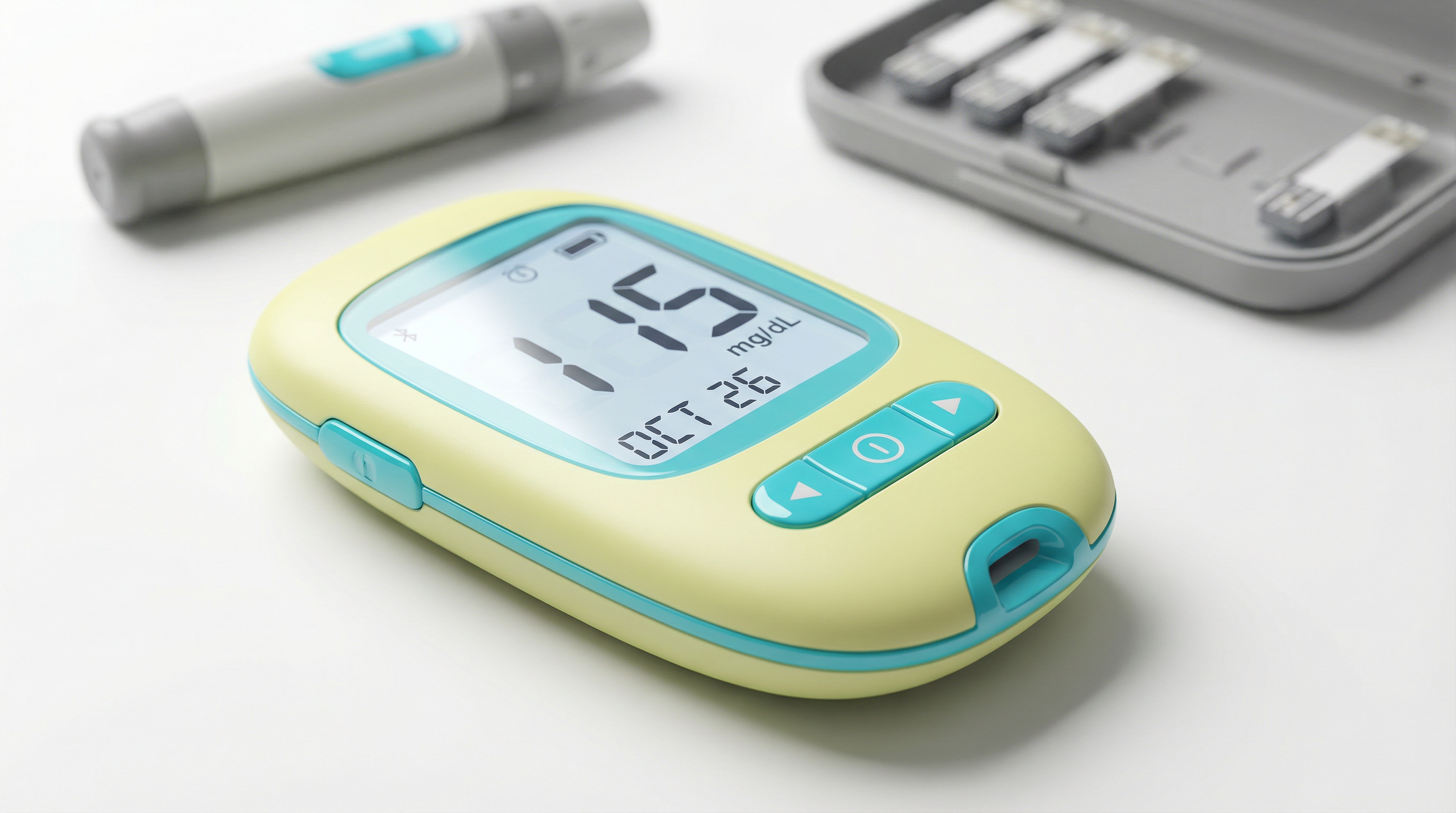
Accessible Blood
Glucose Monitor
Designing reliability and ease of use for elderly and low-income users through innovative self-loading test strip technology.
Bridging the Accessibility Gap in Diabetes Care
Traditional blood glucose monitors present significant usability challenges for elderly users and individuals with limited dexterity. The process of handling small test strips, aligning them correctly, and managing consumables creates barriers to consistent diabetes management.
The design challenge was to create an affordable, reliable device that eliminates these friction points while maintaining clinical accuracy. The target demographic—elderly users and low-income individuals—required a solution that prioritized simplicity without compromising on functionality.
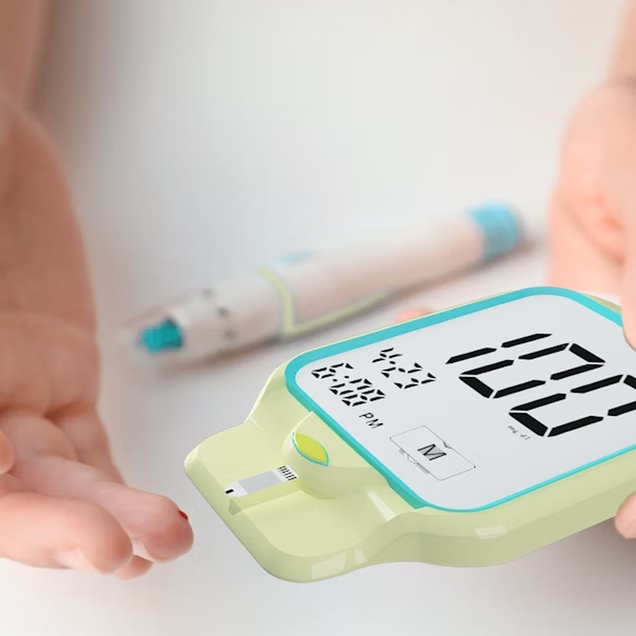
Eliminating Manual Handling Without Increasing Cost
The primary engineering challenge was developing a self-loading mechanism that could reliably position test strips while keeping manufacturing costs low enough for affordability. Existing automated systems were prohibitively expensive, pricing out the target demographic.
Additional constraints included ensuring the device met FDA accuracy standards, designing for injection-molded production to minimize unit cost, and creating an intuitive interface that required minimal instruction for users with varying levels of technical literacy.
Integrated Cartridge System with Slider Mechanism
Self-Loading Innovation
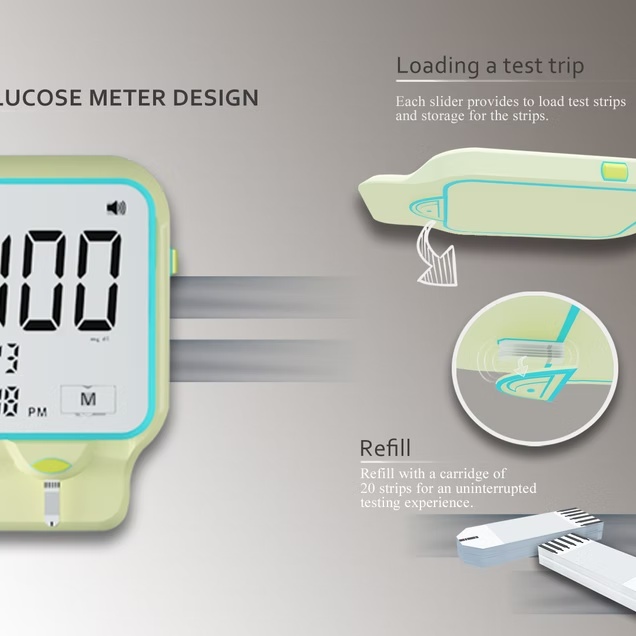
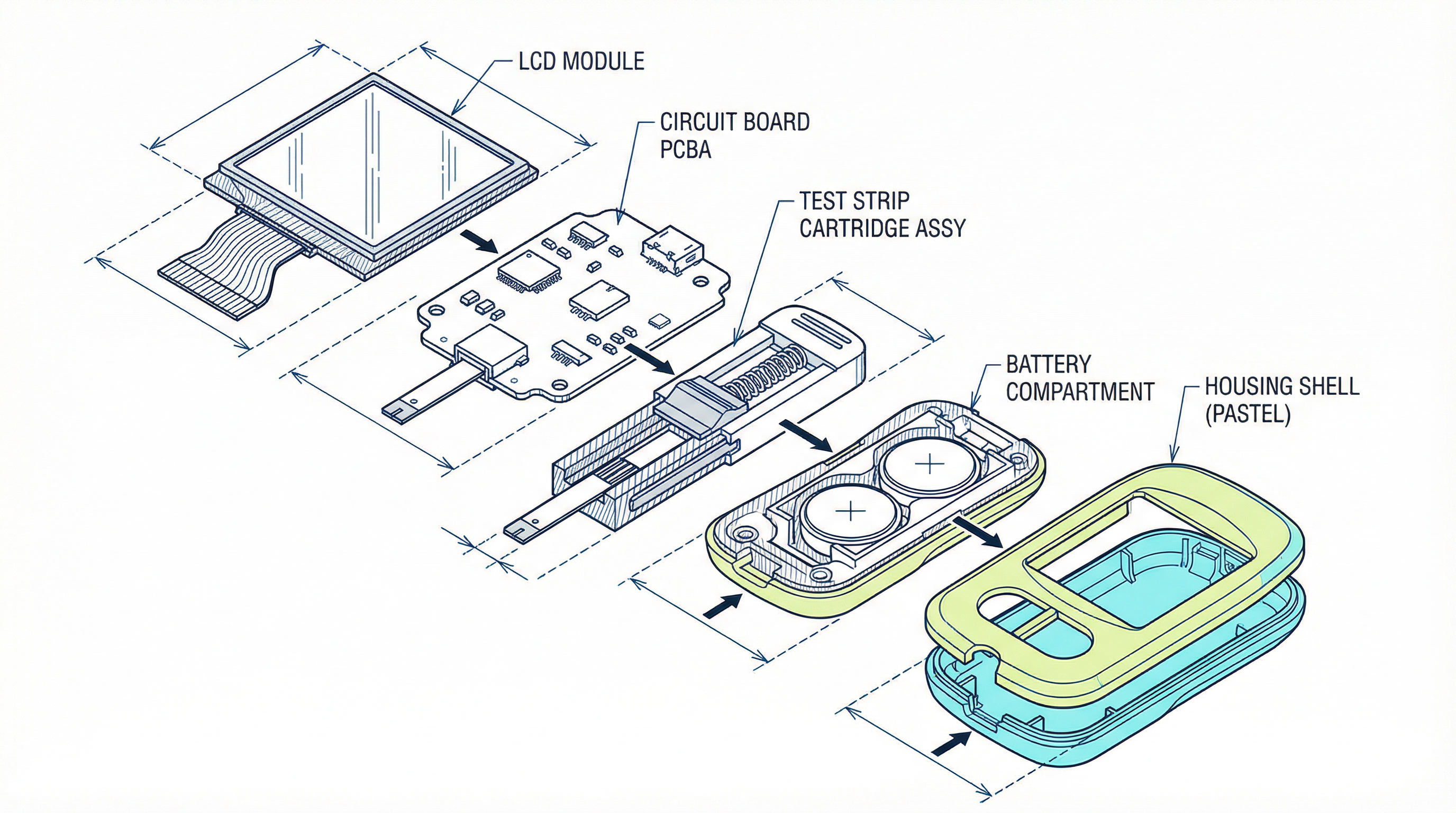
The breakthrough came from integrating the test strip storage directly into the device body. A simple slider mechanism advances a new strip into testing position with a single motion, eliminating the need for users to handle individual strips. The cartridge holds 50 strips, providing weeks of testing before requiring a refill.
The mechanical design uses a spring-loaded ratchet system—a low-cost, reliable solution that requires no electronics. This approach reduced the bill of materials by 40% compared to motorized alternatives while improving reliability in varied environmental conditions.
Accessible Interface Design
The display uses extra-large numerals (18mm height) with high-contrast LCD technology, ensuring readability for users with visual impairments. Tactile buttons with audible feedback provide confirmation without requiring users to look at the device during operation.
The housing geometry was optimized through ergonomic studies with elderly participants. The curved form factor fits naturally in the palm, while the soft-touch pastel finish provides grip security without requiring excessive force. Color-coded zones (cyan for interaction points, yellow-green for grip areas) guide intuitive use.
Reducing Barriers to Consistent Diabetes Management
The design successfully achieved FDA accuracy standards while maintaining a target retail price point accessible to low-income users. User testing with elderly participants demonstrated an 85% reduction in handling errors compared to traditional monitors, with 92% of participants able to complete a test independently after a single demonstration.
The self-loading mechanism patent is currently pending, with manufacturing partnerships under negotiation. The project demonstrates how thoughtful industrial design can address real-world accessibility challenges while maintaining commercial viability through cost-conscious engineering.